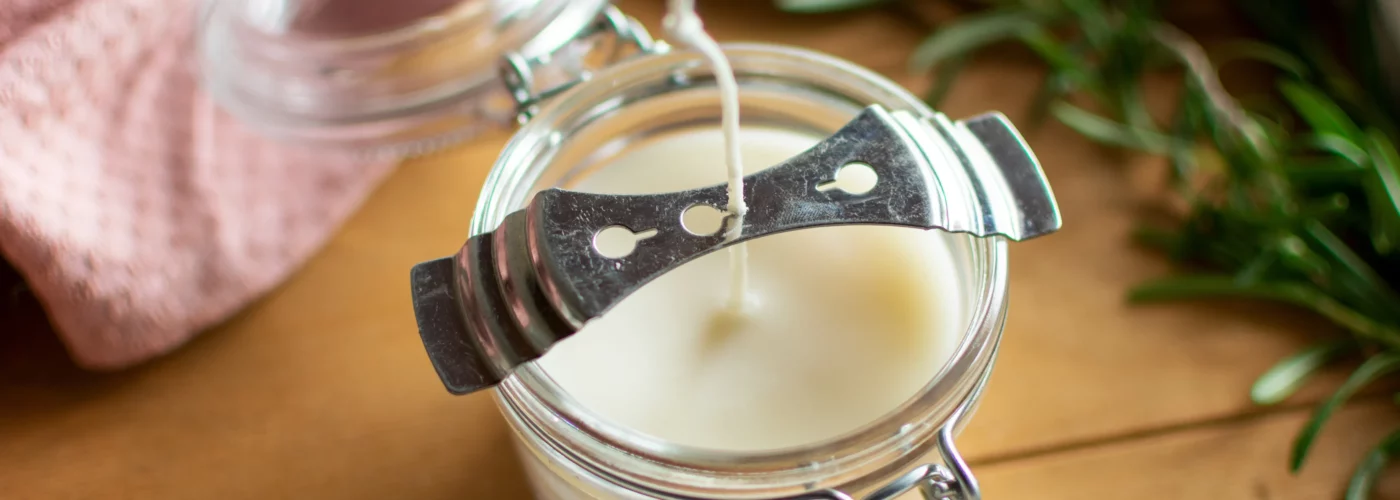
Cracks on the surface of your candles can be frustrating. These cracks are caused by several factors, including cooling your wax too quickly.
When the wax cools too quickly, it contracts suddenly. It thus creates cracks on the surface of the candle. To avoid this, try letting your candle cool slowly in a place with a constant room temperature and avoid drafts.
Unmoulding the candle before it has completely cooled may result in cracking of the surface. Allow the candle to cool in the mold for the recommended time. Be sure to use suitable molds if you are making candles in jars or other containers.
Improper mixing of wax (soy wax, canola wax, or any other type of vegetable wax), fragrances, or dyes can also lead to cracking. Uneven distribution of wax in the mold can create areas of tension, thus favoring the appearance of cracks during cooling. Make sure the ingredients are well incorporated. Likewise, mixing incompatible waxes can cause problems. Each type of wax has its own shrinkage and solidification characteristics, and mixing waxes with different characteristics can result in cracking due to internal stress.
Avoid overloading the candle with fragrance, which could compromise its structure and cause cracks in its surface. To do this, follow our dosage recommendations on our product sheets.
Certain additives and dyes can change the composition of the wax and cause cracking. You must be careful with the dosage of these (dosage indication on our product sheets).
If the wax is not poured evenly into the mold, thicker areas may crack as they cool. Make sure to pour the wax evenly.
If your candle is already cracked, you can try gently melting the surface with a hairdryer to smooth out the cracks. Use caution not to overheat the spark plug.
To discover our offers, find out about our new products and benefit from -10% on your next purchase!